We have recently learned about the Effects Model theory and have studied the points that it makes.
How does this theory relate to our video?
-This model suggests that media texts must have a negative effect on the audience. However, although the message we portray through the video IS sad, we feel that our music video does not necessarily have the ability to cause a negative effect on the audience, e.g violence or crime. The video does contain aspects of sadness, and missing sombody, however there are no scenes of crime, violence or 'wrongdoings' that would provoke an audience.
-We do not feel that any of the behaviour in our video will be copied.
-We do not see any reason for our text to be banned, like many of the texts that fit the theory have been.
-Our video does not provoke a moral panic.
-We do not feel that the audience will be intoxicated by our video, which consequently means that this model is not applicable.
Sunday, 24 March 2013

Digipak- 2nd and final draft.
We decided not to use the images that we were planning on using and decided to take some more pictures of our own that were more relatable to the song.
As the song is called 'Home', and we haven't actually included a 'Home' in the video, we decided to incorporate it into the digipak.
Here are the images we are planning on using:


 We decided to go for a simple look, as our products overall, are relatively simple.
Once the images were added onto the digipak, we decided to use a font that looked like a girls handwriting, to make the title of the front cover.
This handwriting gives the audience something to relate too, so we decided to use this for the track list and back cover too.
As the song is called 'Home', and we haven't actually included a 'Home' in the video, we decided to incorporate it into the digipak.
Here are the images we are planning on using:


The shots of just grass will be used along side the main front cover image, making a landscape like image overall.
We also decided to take pictures of a guitar and incorporate those into our digipak, as our video
and the song contains guitar.
Here is the digipak we created using the images of the guitar and the images above:
 We decided to go for a simple look, as our products overall, are relatively simple.
Once the images were added onto the digipak, we decided to use a font that looked like a girls handwriting, to make the title of the front cover.
This handwriting gives the audience something to relate too, so we decided to use this for the track list and back cover too.
We decided to make this a single, not an album, so on the track list, we put the single, (with video included), a behind the scenes video, and an interview with Gabrielle Aplin, once again, to help the audience relate and connect with her as much as possible.
On the back cover, we put a personal message from Gabrielle Aplin and her signature, which (especially if people were big fans), would encourage audiences to buy the digipak and single.
Finally, we added a barcode, as anything that must be sold or bought must have one.
Audience Theory- Feminist Film Theory and Audiences
The Feminist Film Theory and Audiences was created by Laura Mulvey in her 1975 essay, 'Visual Pleasure and Narrative Cinema', which looked at how women were photographed in cinema.
Mulvey states that cinema reflects society and therefore cinema reflects the patriarchal nature of society.
Mulvey's work is catagorised into three sections:
This is where the 'gaze' of the camera is that of the male 'gaze'. The male 'gaze' is active whilst the female 'gaze' is passive. Throughout a narrative, Mulvey believes that the male 'gaze' is directed towards the female characters. The audience is made to identify with the male 'gaze' as the camera films from the optical as well as the lbidinal point of view of the male character.
There are three levels of the cinematic 'gaze'; the camera, character and spectator and these objectify the female character. This is known as the Triple Gaze.
The Triple Gaze :
Audience -> Camera -> Male -> Female
A consequence of the triple gaze is that audiences are forced into viewing the female as a sexual object. An example of this is found in James Bond: Doctor No, where Ursula Andress is viewed with the male 'gaze'.
In this clip, Andress is viewed through the male 'gaze' and is viewed as an object of desire. The majority or James Bond films follow this, which is why they were generally popular with males. However, James Bond: Quantom of Solace was favoured by women, and was viewed through a female 'gaze'.
The audience is constructed as though everyone was male. Women are forced to look at the text as though they were a male member of the audience.
This occurs through the process of Suture.
Agency
In classical Hollywood cinema, the male protaganist has agency- he is active and powerful. He is the agent, and the dramatic action unfolds around him. The female character is passive and powerless- she is the object of desire for the protagonist and audience.
Mulvey argues that women have two roles in a film:

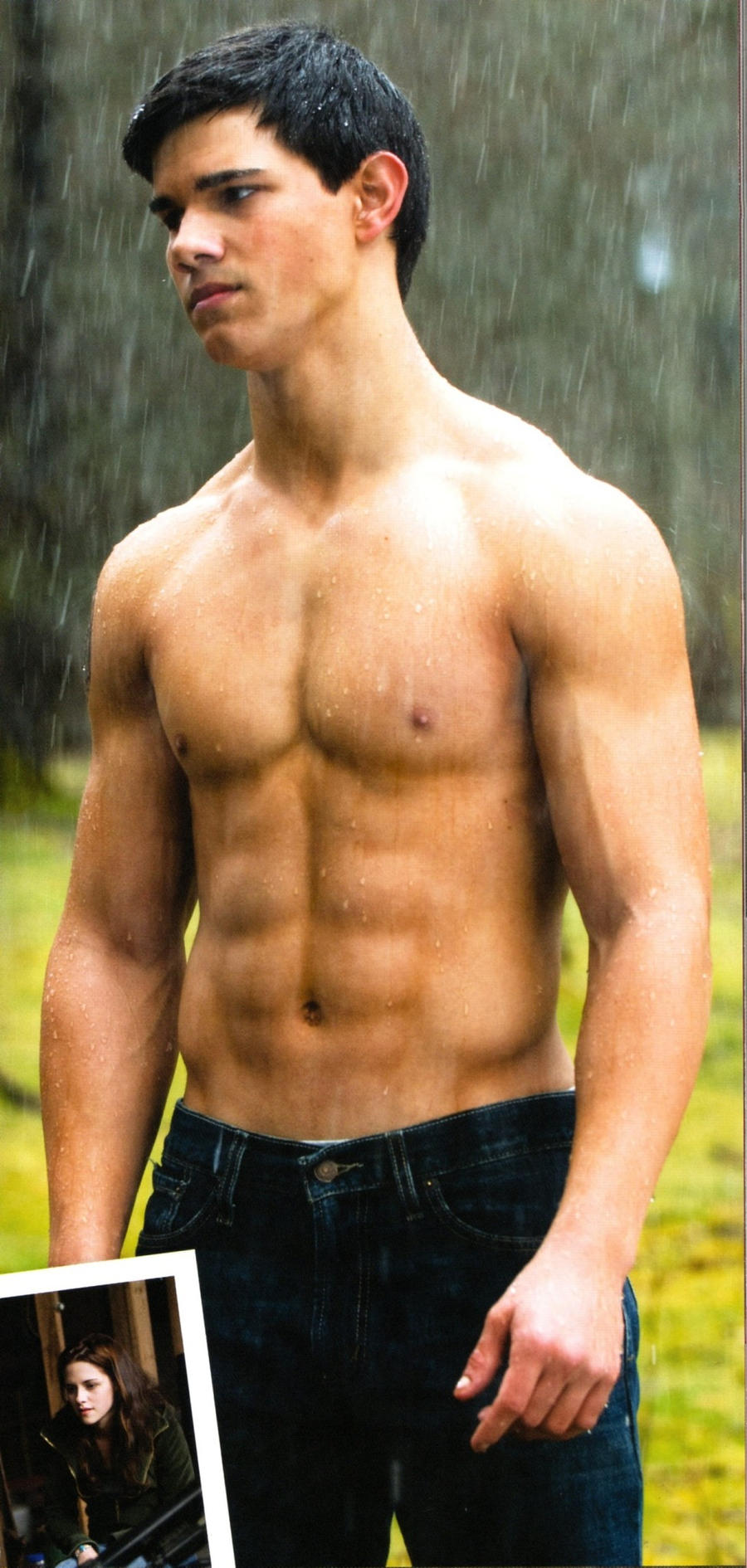
However, men are also objectified in certain texts and viewed as the object of sexual desire. An example of this would be the Twilight Saga. A saga known for its excessive use of topless-ness and attractive male characters.

Mulvey states that cinema reflects society and therefore cinema reflects the patriarchal nature of society.
Mulvey's work is catagorised into three sections:
- The 'Gaze'
- Agency
- Erotic desire
This is where the 'gaze' of the camera is that of the male 'gaze'. The male 'gaze' is active whilst the female 'gaze' is passive. Throughout a narrative, Mulvey believes that the male 'gaze' is directed towards the female characters. The audience is made to identify with the male 'gaze' as the camera films from the optical as well as the lbidinal point of view of the male character.
There are three levels of the cinematic 'gaze'; the camera, character and spectator and these objectify the female character. This is known as the Triple Gaze.
The Triple Gaze :
Audience -> Camera -> Male -> Female
A consequence of the triple gaze is that audiences are forced into viewing the female as a sexual object. An example of this is found in James Bond: Doctor No, where Ursula Andress is viewed with the male 'gaze'.
In this clip, Andress is viewed through the male 'gaze' and is viewed as an object of desire. The majority or James Bond films follow this, which is why they were generally popular with males. However, James Bond: Quantom of Solace was favoured by women, and was viewed through a female 'gaze'.
The audience is constructed as though everyone was male. Women are forced to look at the text as though they were a male member of the audience.
This occurs through the process of Suture.
Agency
In classical Hollywood cinema, the male protaganist has agency- he is active and powerful. He is the agent, and the dramatic action unfolds around him. The female character is passive and powerless- she is the object of desire for the protagonist and audience.
Erotic Desire
- To be an object of erotic desire for the characters
- To be an object of erotic desire for the audience.
However, men are also objectified in certain texts and viewed as the object of sexual desire. An example of this would be the Twilight Saga. A saga known for its excessive use of topless-ness and attractive male characters.
Audience Theory - Suture
Suture is the way in which, in particular Hollywood, films are created, in terms of narrative, sound, editing and mise-en-scebe.
This positions the audience in certain ways, making only the preffered reading possible, however unconscious the audience is of that position.
An example of Suture is shown in the film 'Crash'. In this film, the father gives his daughter a 'bullet-proof cloak'. From this scene, the emphasis is placed on the cloak and how the girl believes that it actually exists.
Therefore, the audience are prepared for the girl to come into danger when the father is confronted by an angry man with a gun.
From the emphasis of the cloack, to the slow motion shots of the girl running towards her father, it is clear what is going to happen.
The audience are 'stitched' into the film and cannot escape the sympathy they feel for the family, exactly the way the producer wnts them too.
Audience Theory- The Reception Theory.
 The Reception Theory is a theory created by academic, Stuart Hall in the 1970s.
This theory considered how texts were encoded with meaning by producers and then decoded by audiences. The theory suggests that:
- When a producer creates a text, it is encoded with a meaning or message that they want to convey to the audience.
- In some cases, the audience will correctly decode the message and understand what the producer is conveying.
- In other cases, the audience reject or fail to understand the message that the producer is attempting to convey.
Hall identified these three readings as:
- Dominant or preferred.
- Negotiated.
- Oppositional.
Dominant readings.
This is when the audience decodes the message as the producer wants them too, and largely agrees with it. An example of this would be watching a political speech and agreeing with it,
Negotiated readings.
This is when the audience accept, reject or refine the message in light of previous views or texts that they have seen. An example of this would be, watching a policital speech and neither agreeing nor disagreeing to it.
Oppositional reading.
This is when the audience either decode the message wrong, or reject the message portrayed by the producer. An example of this would be watching a political speech and disagreeing with it completely.
Audience Theory- The Uses and Gratifications Model
A futher theory regarding the way audiences digest texts is the Uses and Gratifications Model. This model is opposite to the Effects Model and its main points are:
- The audience are ACTIVE instead of PASSIVE.
- The audience uses the text and is not used by it.
- The audience uses the text for their own pleasure (gratification).
This model claims that audiences use media texts to gratify needs for:
- Escapism
- Information
- Pleasure
- Sexual stimulation
- Relatability and comparisons with own lifestyle
- Diversion
- Learning
- Relaxation
- Emotional stimulation
- Help with issues of social identity
- Help with issues of personal identity
- Help with issues of aggression and violence.
Tuesday, 19 March 2013
Audience Theory -The Effects Model.
Previously, in class, we learned about The Effects Model, which is an audience theory. In order to analyse our final product in the most useful way possible, we must look at it from several points of view.
The Effects Model is a theory relating to how audiences interpret and are affected by media texts, and in turn, our music video.
What is The Effects Model?
This in turn, causes faults in the James Bulger case.
The Effects Model is a theory relating to how audiences interpret and are affected by media texts, and in turn, our music video.
What is The Effects Model?
- The Effects Model believes that the consumption of media texts have an influence upon the audience.
- It is generally considered that the effect of this text is negative.
- Audiences are viewed as 'passive' and 'powerless' to prevent the influence that the text has on them.
- The model is also reffered to as the Hypodermic Model.
- Here, the messages in media text are hypothetically 'injected' into the minds of the audience by the 'syringe-like' media.
- As the audiences are powerless, the media works like a drug, intoxicating the audience who are now addicted and affected.
- In the 1920s and 30s, the Frankfurt School theorised that the mass media acted to restrict and control audiences to the benefit of corporate capitalism and governments.
- The Bobo Doll experiment, created by Albert Bandura in 1961 shoes that 88% of children tested, imitated the violent behaviour shown to them and 40% reproduced the same behavious 8 months after the initial experiment.
- The film, Child's Play 3 was held responsible for provoking two children into the murdering of James Bulger in 1993.
- The game Manhunt is also blamed for the Warren LeBlanc murder of Stefan Pakeerah in 2004.
- The film A Clockwork Orange was viewed as provoking rape and violent attacks in 1971.
- The film Severance was percieved as the inspiration of Simon Everitt's murder in 2006.
This in turn, causes faults in the James Bulger case.
Subscribe to:
Posts (Atom)